








 ELISA detection kit


 Service Hotline
-
ADD:Building 4, Boji Juchuang Technology Park, No. 108 Xishanqiao South Road, Yuhuatai District, Nanjing City
-
TEL:86-25-58578987
-
EMAIL:contact@mightybio.cn
-
PHONE:13701450423, 18705167767

Ebola Virus
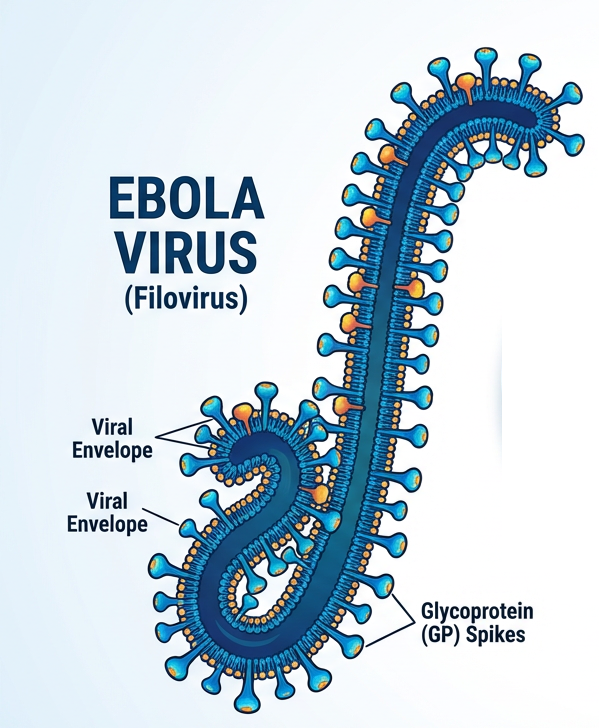
The Ebola virus is a rare and highly pathogenic virus first identified in 1976 in southern Sudan and the Ebola River region of the Democratic Republic of the Congo (formerly Zaire). It is responsible for causing Ebola hemorrhagic fever in humans and other primates (one of the most lethal viral hemorrhagic diseases known). Clinical manifestations of infection include nausea, vomiting, diarrhea, changes in skin coloration, generalized pain, internal and external bleeding, and fever, with a mortality rate ranging from 50% to 90%.
Taxonomically, the Ebola virus belongs to the family Filoviridae, which comprises three genera: Cueva virus, Marburg virus, and Ebola virus. Within the genus Ebola virus, five species have been identified: Zaire, Bundibugyo, Sudan, Taï Forest, and Reston ebolaviruses. Recent outbreaks in West Africa have been attributed primarily to the Zaire strain.
Ebola Virus Recombinant Nucleocapsid Protein
Due to the absence of specific clinical symptoms, the diagnosis of Ebola virus infection relies heavily on laboratory testing. In addition to PCR-based methods, antigen detection techniques that identify viral components in patient samples are widely used for early diagnosis. Among these, the viral nucleoprotein (NP), a structural component of the virus, serves as one of the most critical targets for diagnostic assays.
The Ebola virus recombinant nucleocapsid protein (NP), is a structurally and functionally essential viral component produced through heterologous expression systems. It plays a critical role in viral RNA encapsidation and nucleocapsid assembly, making it a key target for immunological studies and diagnostic assay development. Due to its high immunogenicity and conserved nature, the recombinant NP protein is widely utilized in serological detection, antigen-based diagnostics, and vaccine research.
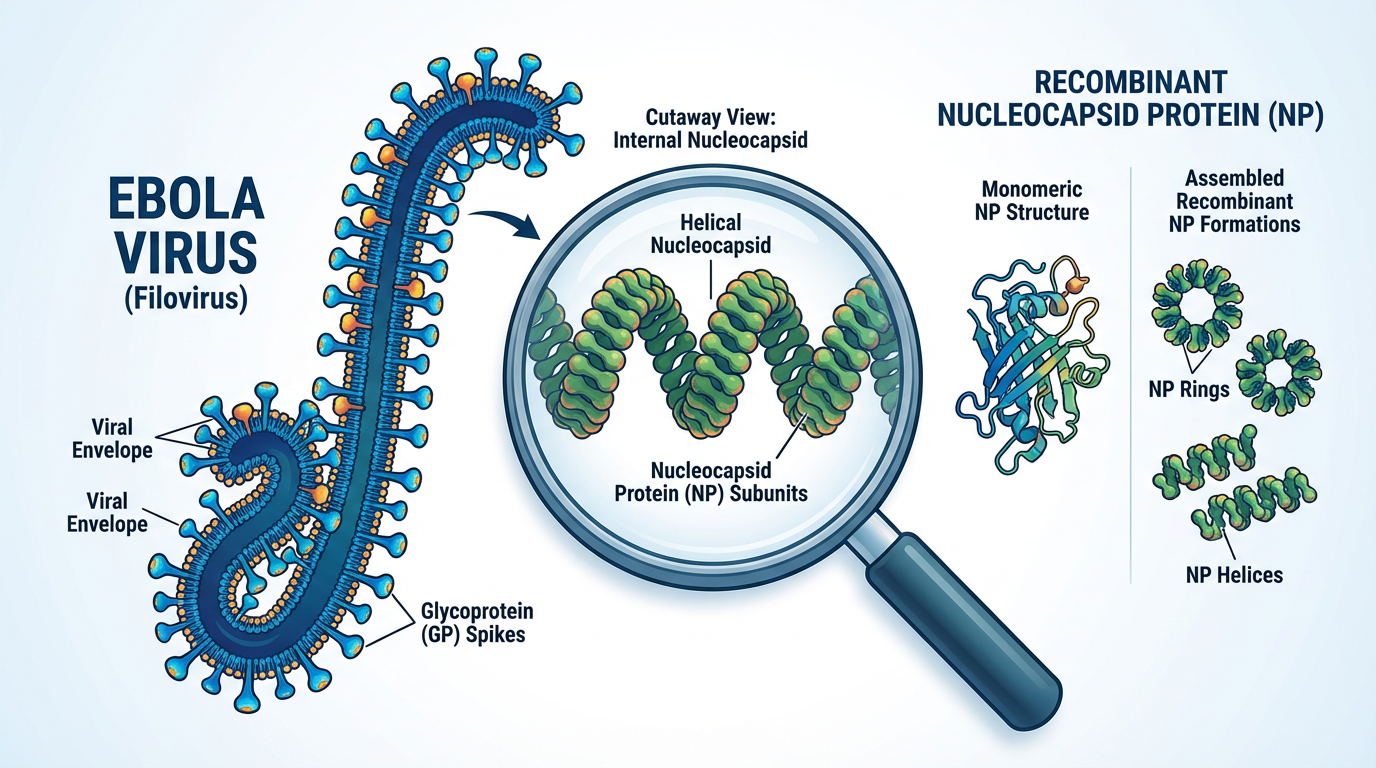
Ebola Virus NP by Nanjing Miaodi Biotechnology
Using the gene sequence of Zaire ebolavirus isolate H.sapiens-wt/GIN/2014/Makona-Kissidougou-C15 (GenBank: KJ660346.2), the gene encoding the nucleoprotein (NP) was cloned and subsequently inserted into a prokaryotic expression vector. The recombinant construct was then expressed in an Escherichia coli system (Fig. 1).
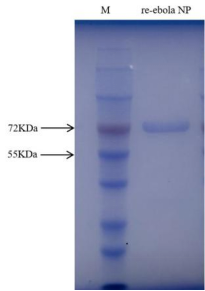
Figure 1. Recombinant expression of Ebola virus nucleoprotein (NP) antigen in a prokaryotic system.
Product Catalog Number:
Recombinant Ebola Virus NP Protein (AG25006)